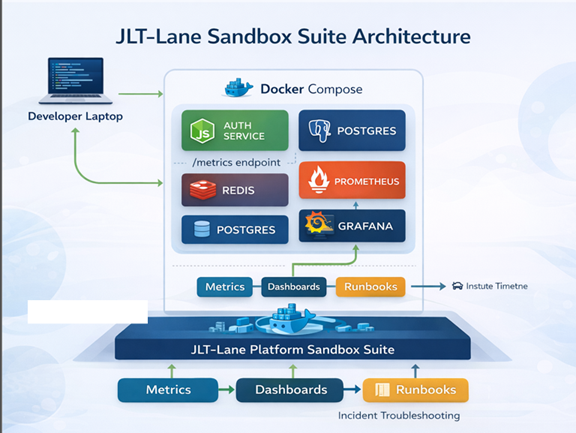

Architecture
This page documents the full JLT Platform Engineering model — from identity and access control, to platform services, observability, runbooks, and deployment guardrails. The diagrams below should be read from top to bottom as one connected platform lifecycle.
Diagrams + design decisions for the JLT-Lane ecosystem.
Key design principles
- Modularity: independently deployable components.
- Security by design: least privilege + encrypted stores.
- Observability: logs, metrics, tracing everywhere.
- Automation: IaC + CI/CD for repeatability.
Diagram gallery
Click any diagram to open the related architecture page.
Platform lifecycle
JLT-Lane Platform Ecosystem
This diagram represents the JLT-Lane platform as a governed lifecycle — connecting architecture, access control, entitlements, delivery, and operations into a single operating system for the platform.
Architecture → Access → Entitlements → Delivery → Operations
This diagram is the index of the platform — every system, flow, and control surface expands from here.
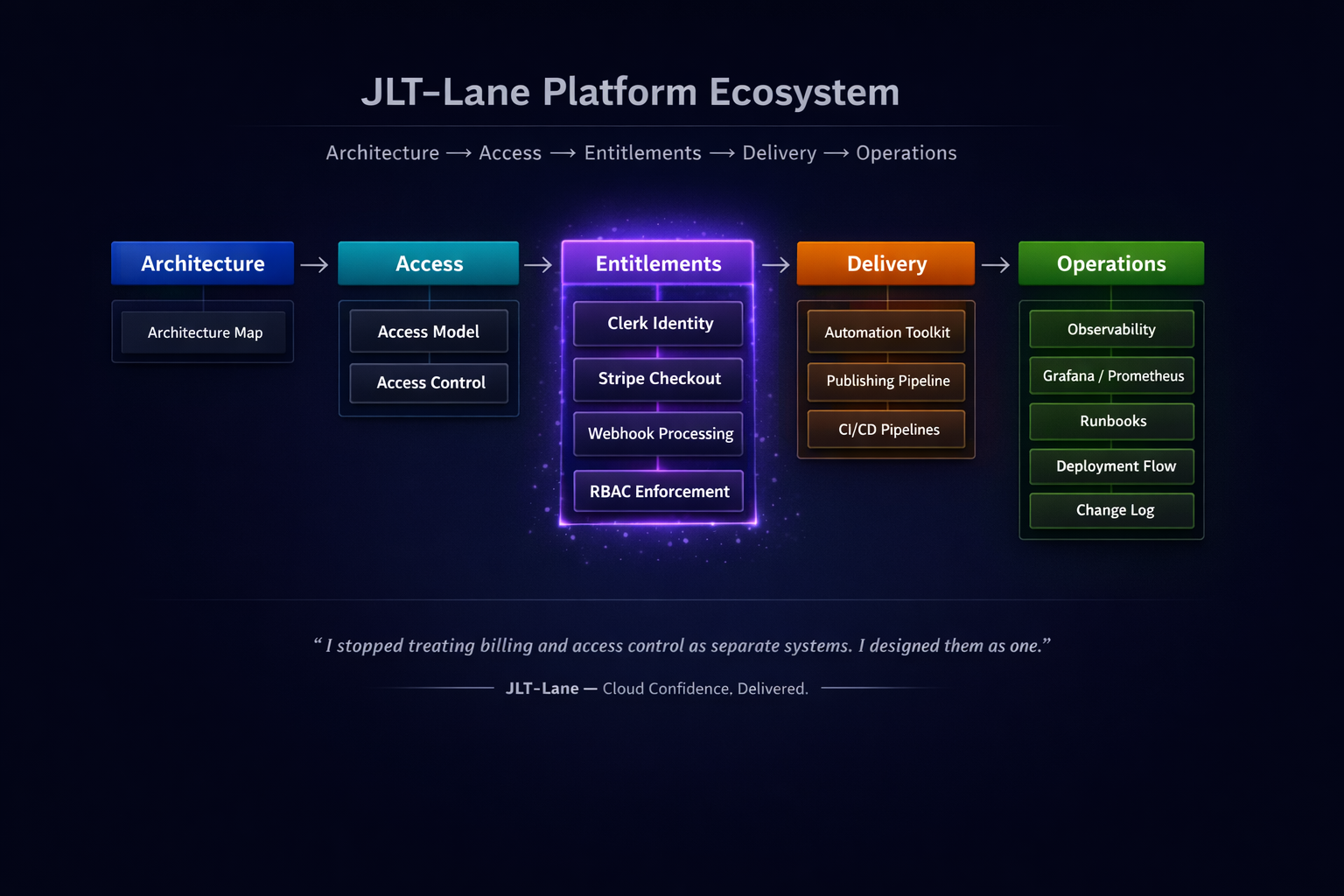
Each layer builds on the previous one — forming a governed platform system.
Platform lifecycle breakdown
The diagram above represents the full platform lifecycle. Each section below expands one part of that system — from architecture and access control, to entitlements, delivery, and operations.
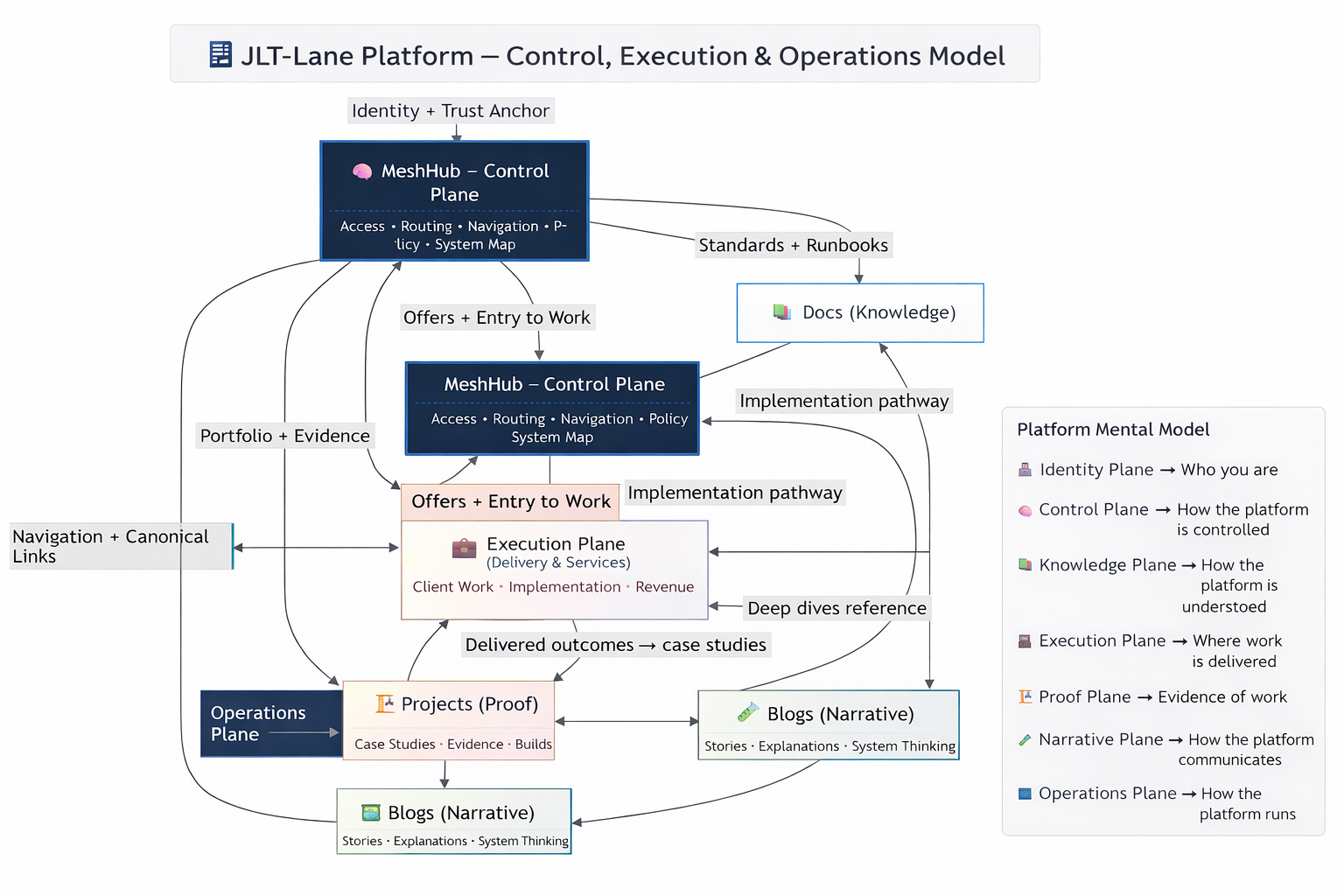
Platform structure, control plane, and service ecosystem.
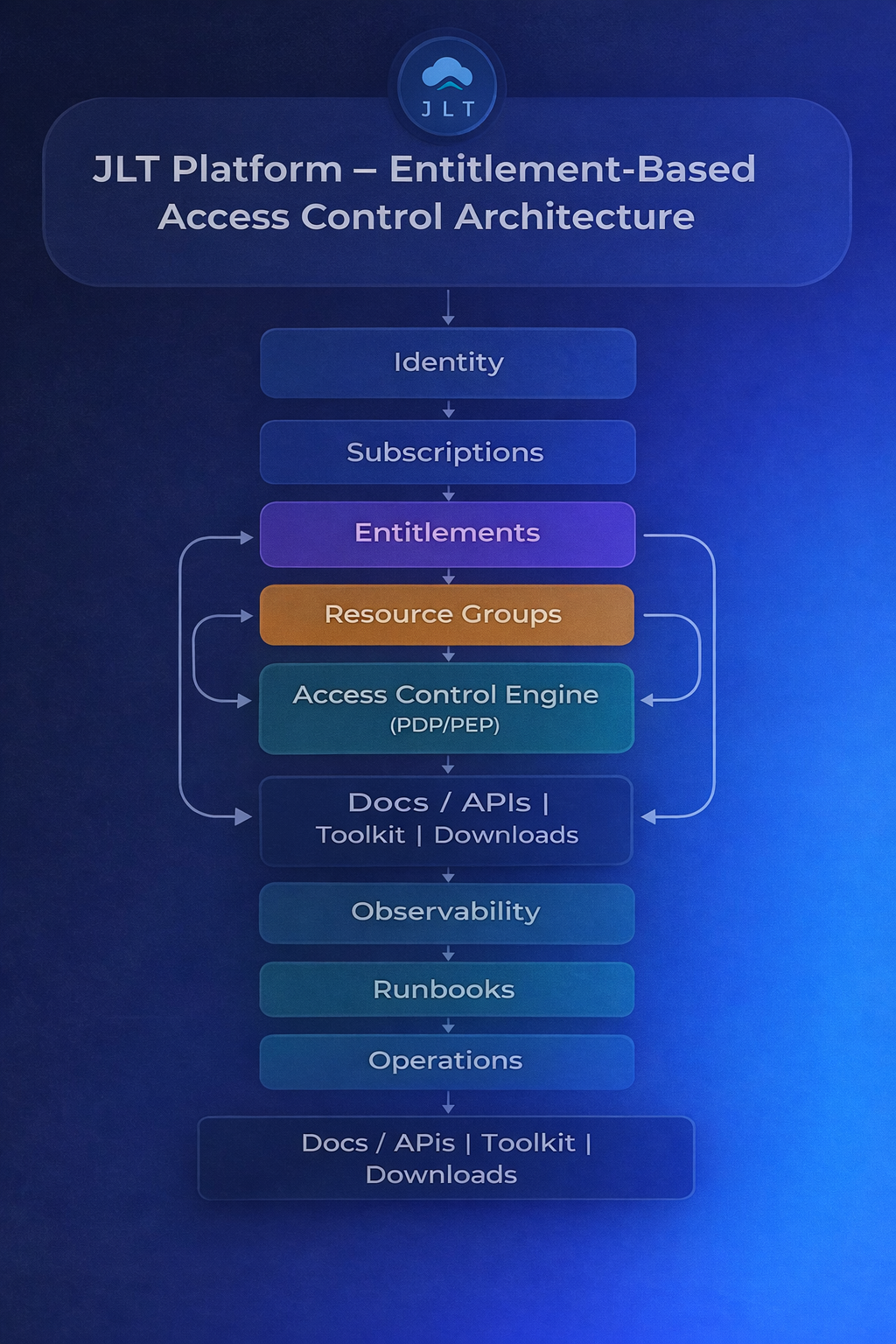
AccessIdentity roles, access models, and authorization boundaries.
EntitlementsClerk identity, Stripe billing, webhook processing, and RBAC enforcement.
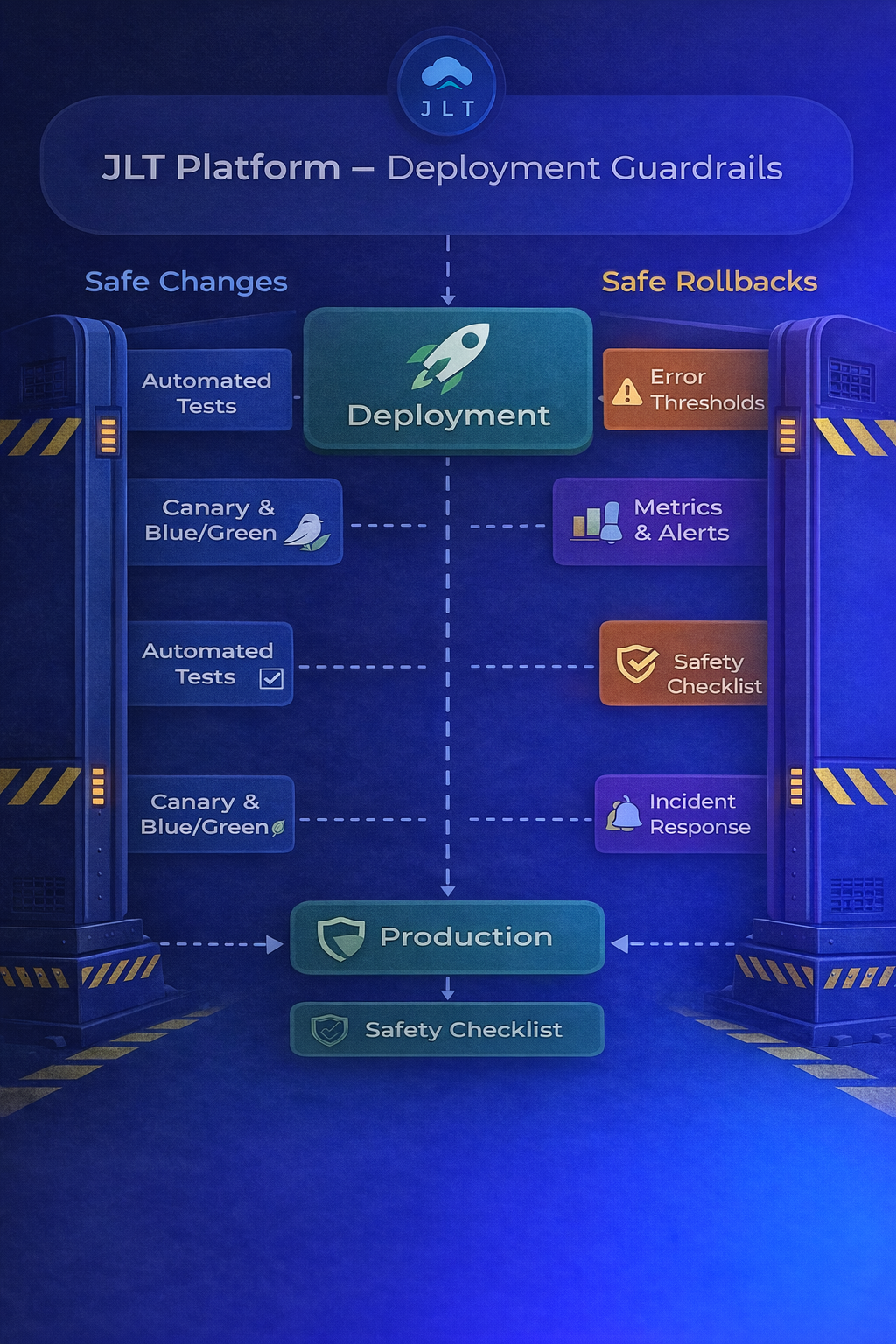
DeliveryAutomation toolkit, pipelines, and deployment guardrails.
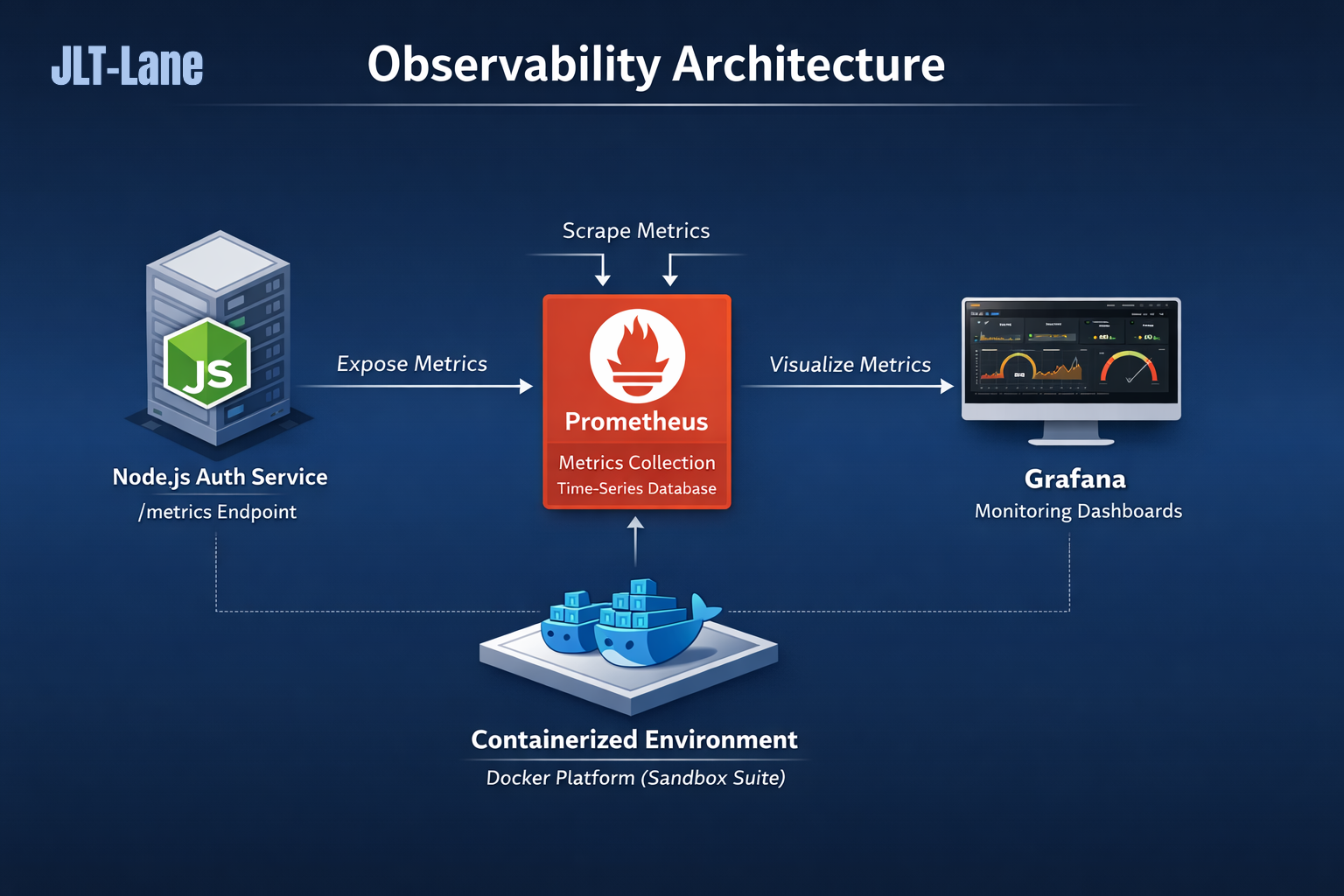
OperationsObservability, runbooks, monitoring, and platform reliability.
Platform Architecture
Core platform structure including the control plane, platform surfaces, and service ecosystem.
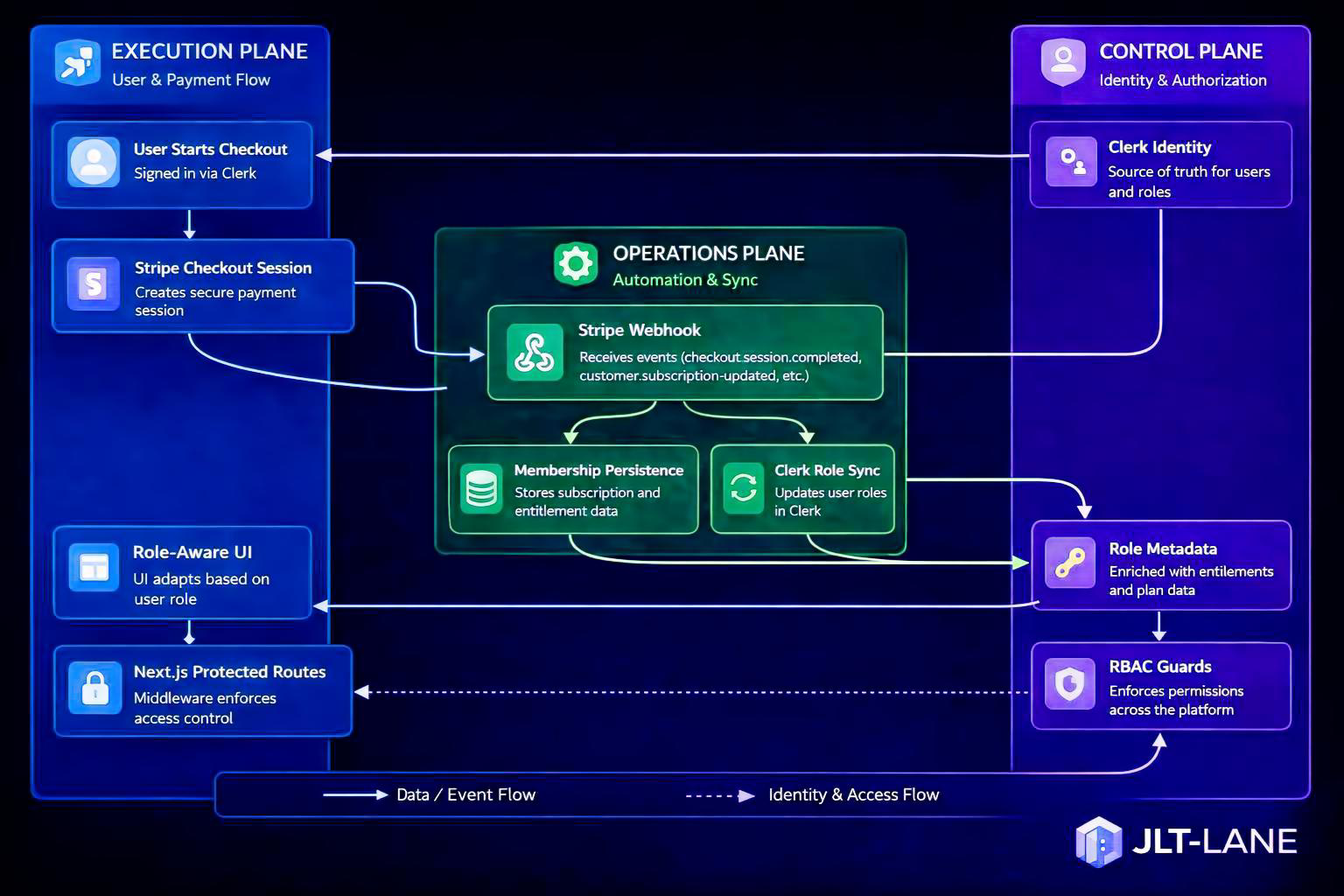
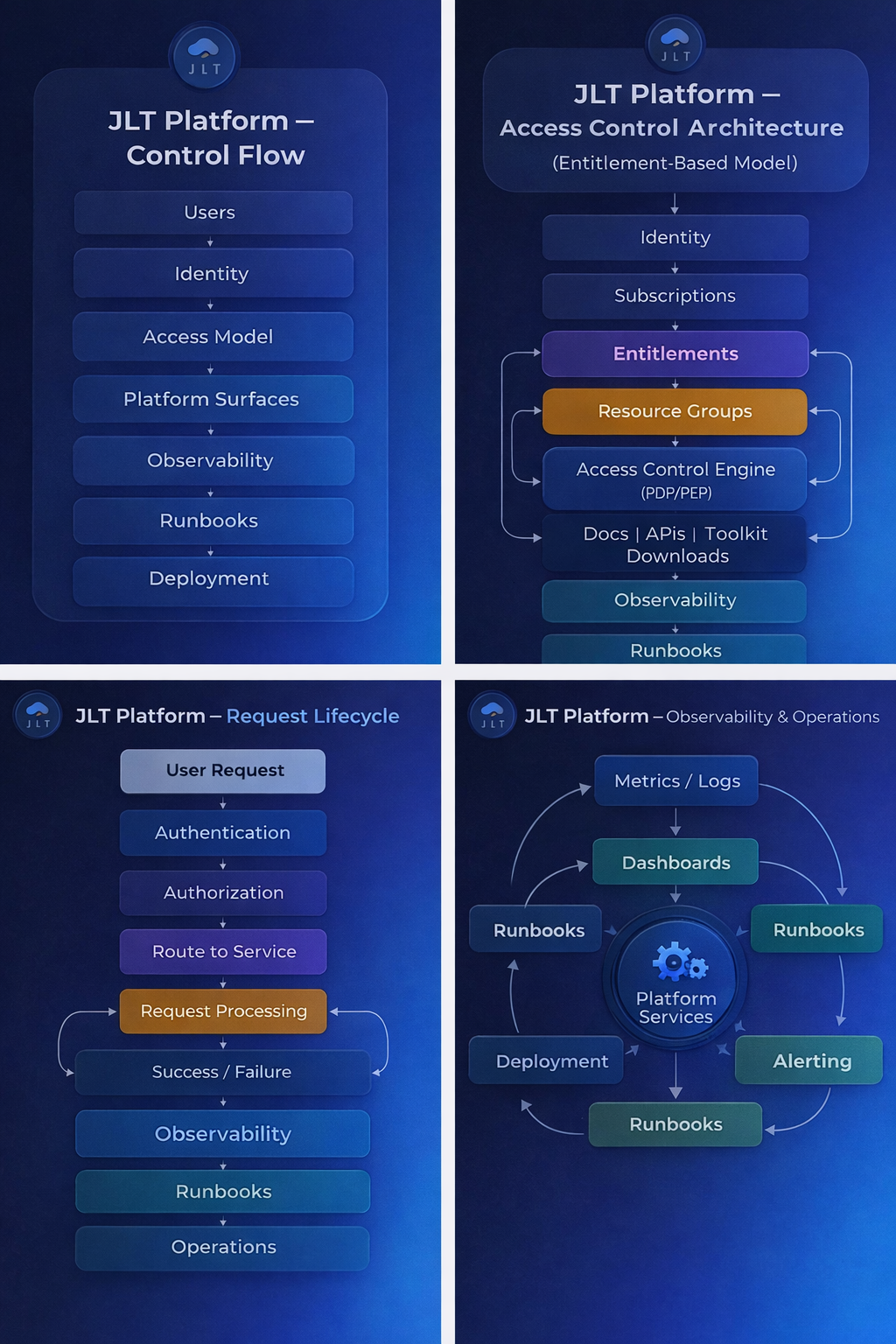
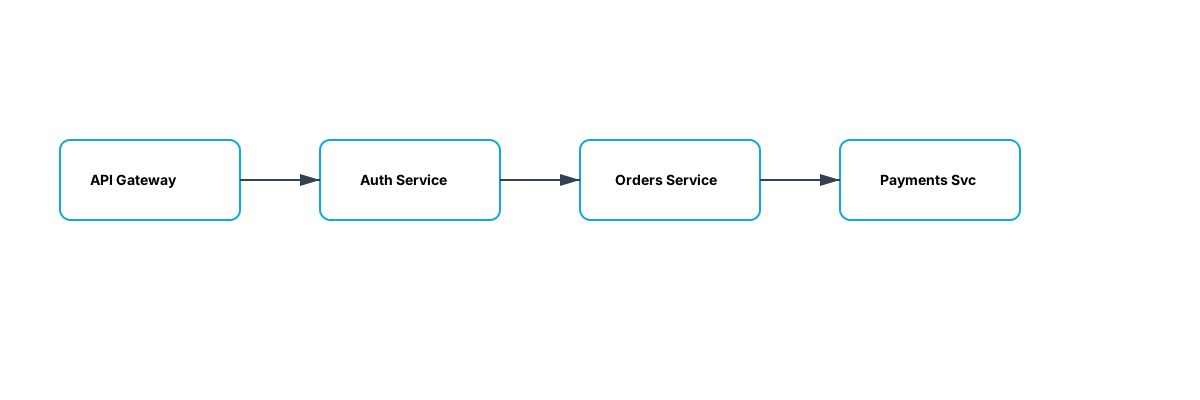
Identity & Access Flow
How identity, entitlements, access decisions, and request lifecycles move through the platform.
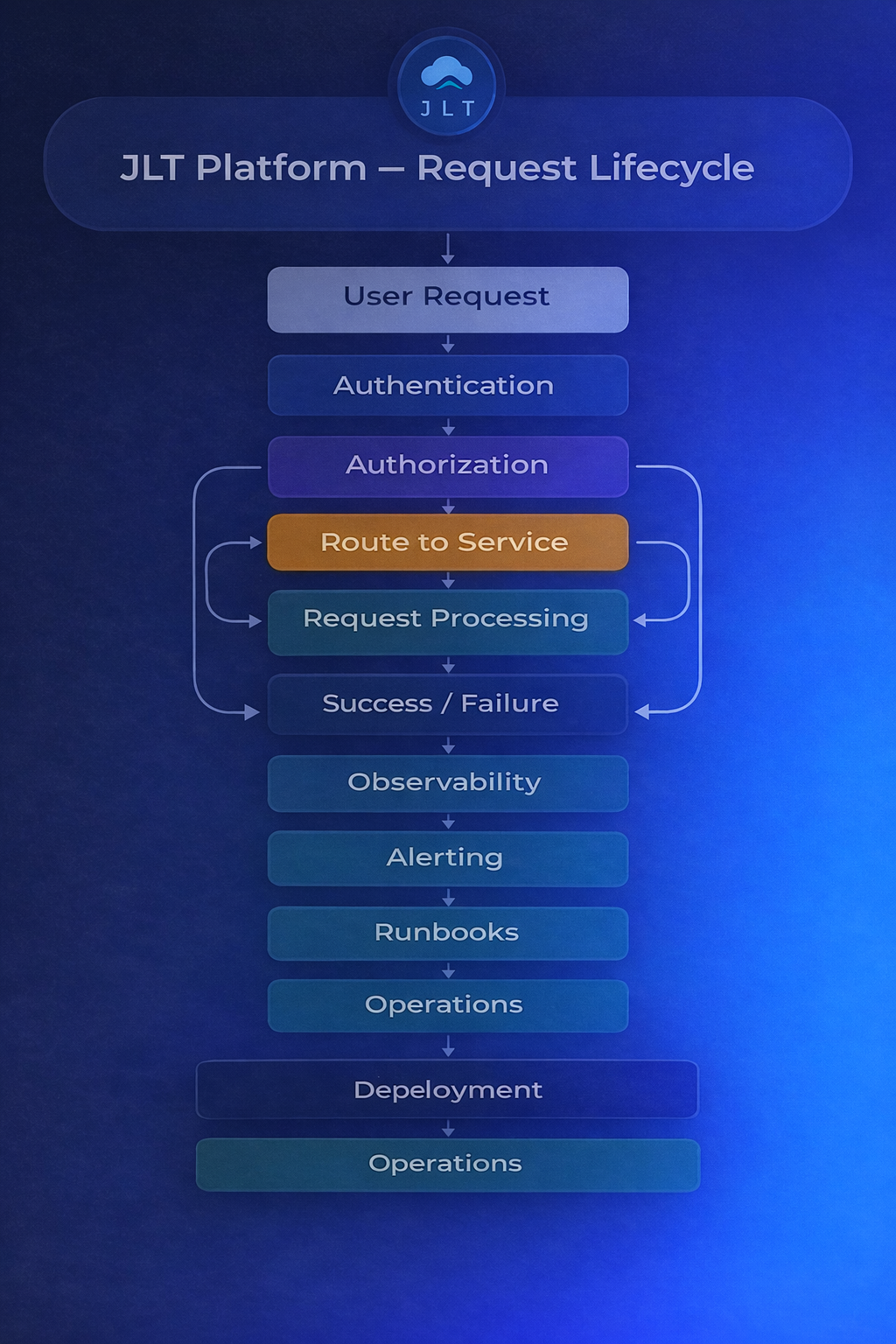
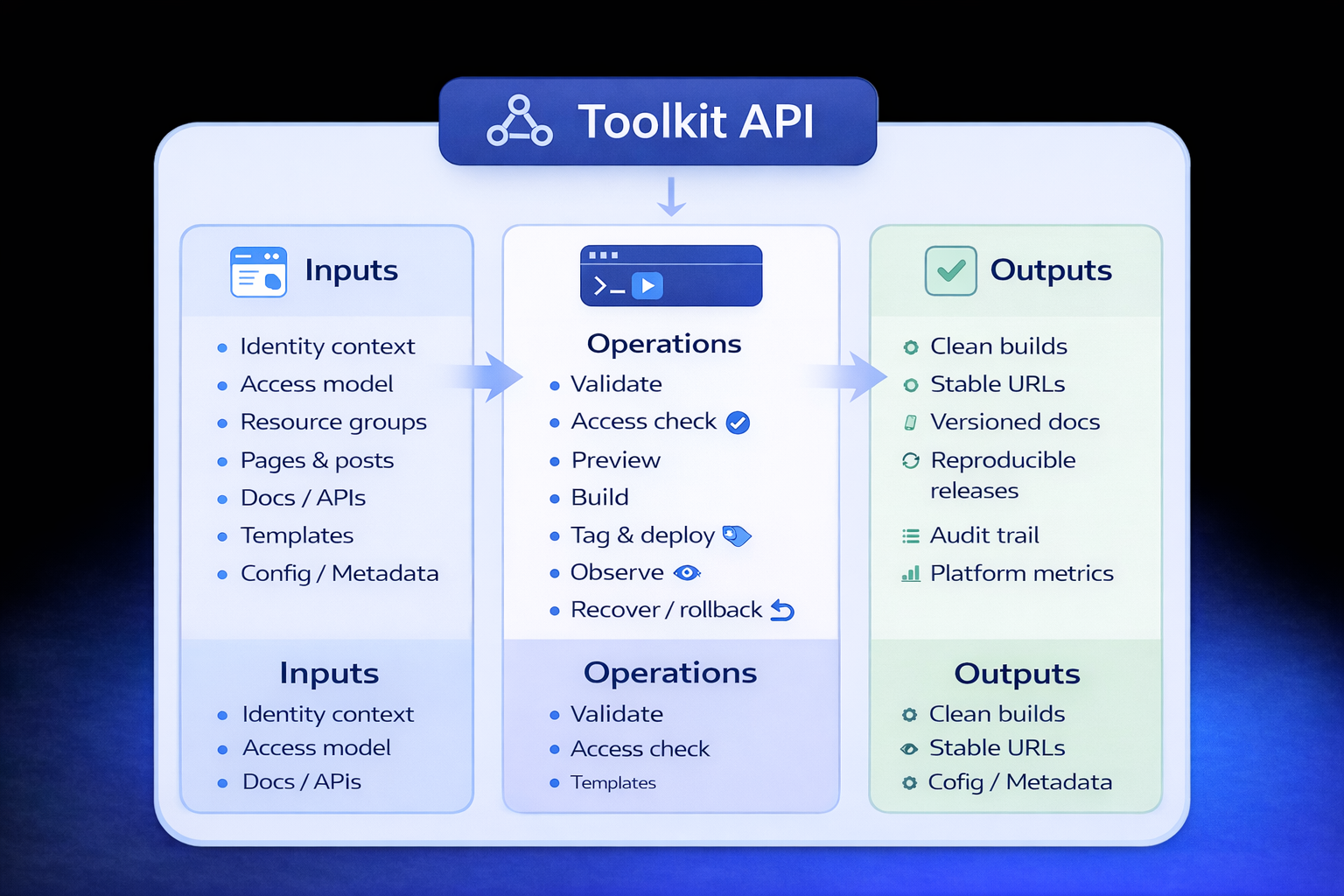
Platform Toolkit & Delivery
Automation toolkit, validation pipelines, deployment guardrails, and release safety mechanisms.
Operations, Observability & Reliability
Metrics, dashboards, runbooks, incident response, and continuous platform improvement loops.